Fixing Our Streets is one of the few transportation programs Portland controls locally that consistently delivers visible, basic outcomes: paving, pothole repair, sidewalks, lighting, signals, and safety improvements. The program is currently funded through the voter-approved 10-cent local gas tax and the Heavy Vehicle Use Tax (HVUT), with the current cycle running 2024–2028.
That said, a new Fixing Our Streets package cannot succeed on goodwill alone. The city’s needs are larger than what a single funding tool can reliably cover, especially as costs rise and the system ages. If we want a package that is durable and credible, alternative funding needs to be treated as the central design question, not an afterthought.
A stronger package should be built around measurable performance. Not aspirational language, but outcomes that can be tracked year over year and communicated clearly to the public. When the city asks residents to fund street maintenance and safety, the public has a right to understand what success looks like, how decisions were made, and what changed because of the investment.
PBOT already frames Fixing Our Streets as a maintenance and safety program with defined investment categories and an oversight structure. That is a good foundation. A new package should strengthen the clarity of reporting so the public can see whether projects are meeting timelines, whether spending matches priorities, and whether safety and maintenance outcomes are improving where the need is greatest.
Portland can have the best project list in the world, but if the funding is unstable or insufficient, it becomes a cycle of delays and deferrals. That undermines public trust and makes it harder to deliver basic services. Alternative funding is not about piling onto residents. It is about aligning the costs of street wear and right-of-way impacts with the parties and activities that create them, while maintaining transparency and fairness.
PBOT has already begun publicly discussing concepts that move in this direction. One example is the city’s exploration of a street damage restoration fee intended to address the structural pavement damage caused by trenching and repeated excavation, which is not fully accounted for through existing permit fees and standard restoration requirements. That kind of approach is worth serious consideration because it connects cost to impact, and it supports better coordination.
A strong new package should also be explicit about how Portland will pursue, evaluate, and phase in alternative funding tools, and it should commit to public reporting so residents can see whether those tools are working as intended.
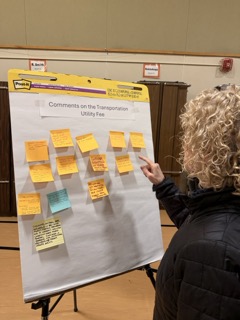
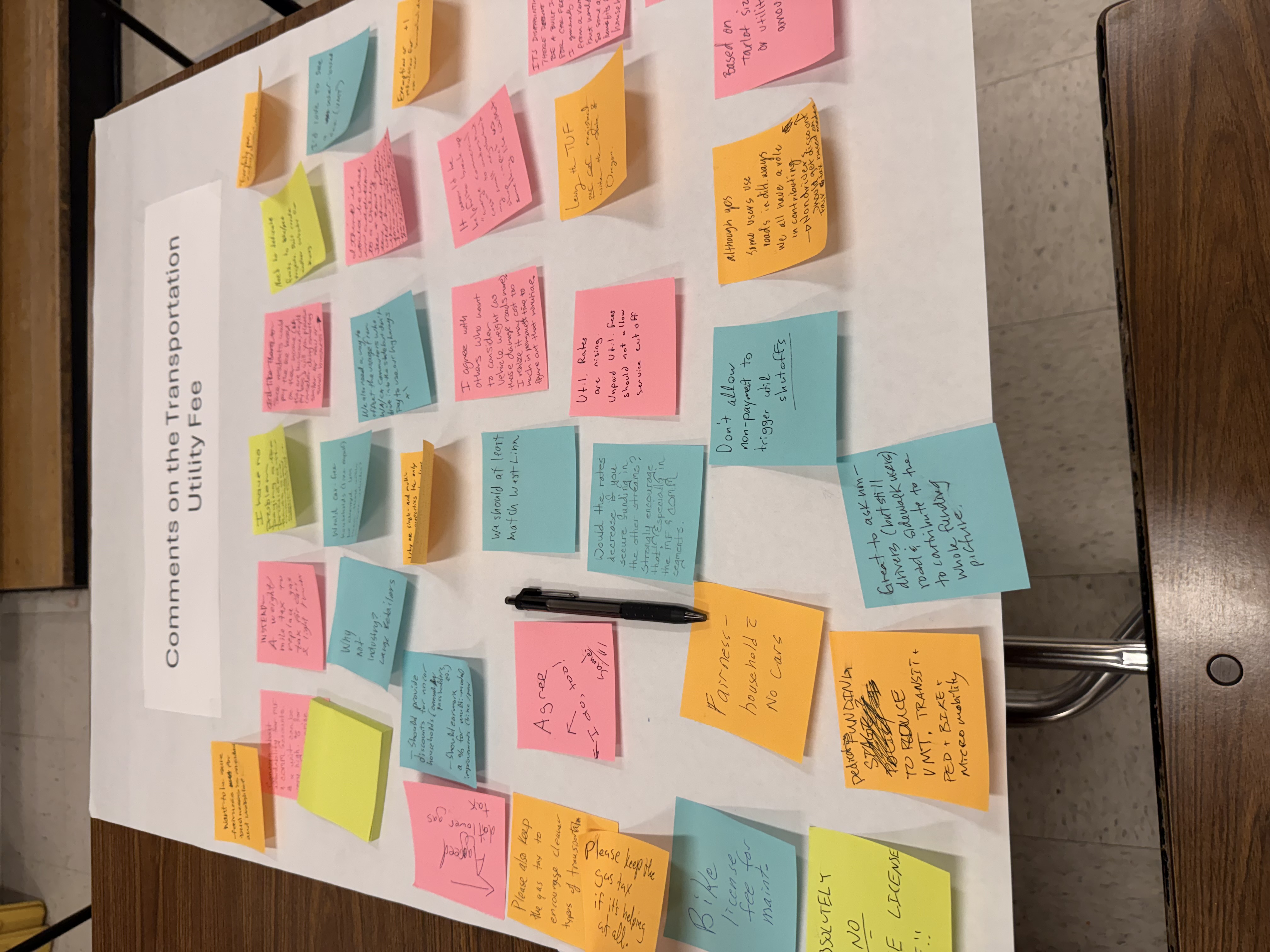
Transportation funding decisions do not land evenly. Street conditions, safety risks, sidewalk gaps, construction impacts, and access to reliable mobility all vary block by block. If the city wants a package that is legitimate, the people most affected by these decisions must have meaningful influence before decisions are finalized.
Fixing Our Streets already includes an appointed Oversight Committee tasked with monitoring revenues, expenditures, program implementation, and construction impacts to businesses, neighborhoods, and residents. That role becomes more important, not less, as Portland looks at new funding strategies and tougher tradeoffs.
Outreach also has to be accessible. Language access, disability access, meeting times that working people can attend, and a clear “what we heard and what changed” loop are not optional. They are the difference between performative engagement and decision-making that holds up under public scrutiny.
A Fixing Our Streets package is not a marketing campaign. It is a governance commitment. Portlanders have renewed this program because it is tangible and because there is a clear purpose behind it. The 2024 renewal measure description is explicit about the program’s intent to fund repair, maintenance, and safety improvements, and it describes how project selection is guided by existing plans and public input.
A new package should build on that trust by making two things non-negotiable: decisions grounded in data and results, and a funding strategy that includes serious alternative funding so the program can deliver what it promises.
If you want, I can tailor this into a version that matches your website tone exactly (campaign voice versus OTCA civic voice), and I can write a shorter companion LinkedIn post that drives people to the full article.