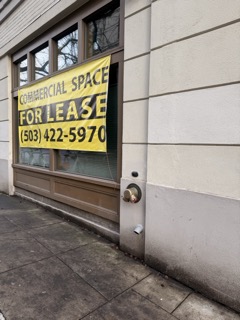
Walk through almost any neighborhood in Portland and you will see it. Empty storefronts with dark windows and “For Lease” signs that seem to sit there for months or even years. The common assumption is that landlords are asking too much rent or that businesses are no longer interested in these spaces. While those factors can sometimes play a role, the real issue is often far more complicated.
In many cases, the problem is tied to how commercial real estate financing works. To understand why some spaces stay empty, we need to understand the financial rules that govern many commercial buildings.
How Commercial Mortgages Shape Rent Decisions
Most commercial buildings are financed through loans from banks or financial institutions. When those loans are issued, they are structured around certain financial performance requirements for the building.
One of the most important of these requirements is called the Debt Service Coverage Ratio, often referred to as DSCR.
The Debt Service Coverage Ratio measures whether the income from the property is high enough to cover the building’s mortgage payments. Banks require the property’s income to remain above a certain threshold so they can be confident the loan will be repaid. For example, a building may be required to generate significantly more rental income than the monthly mortgage payment in order to maintain a healthy financial cushion. This requirement protects lenders, but it can create challenges when market conditions change.
When Lower Rent Becomes a Financial Risk
When the market shifts and commercial rents fall, landlords cannot always adjust their prices freely. If a landlord lowers rent too much, the building’s total income may drop below the level required by the loan agreement. When that happens, the property can fall out of compliance with the lender’s requirements. This can trigger serious consequences such as financial penalties, loan restructuring, or even default. Because of this risk, many property owners face a difficult choice. They can lower the rent to attract tenants and risk violating their financing agreements, or they can keep the rent at the required level and wait for a tenant who can meet that price. In many cases, they choose to wait. The result is a situation that seems illogical from the outside: empty buildings in neighborhoods where small businesses would gladly lease the space at a lower price.
Why Vacant Storefronts Hurt Everyone
Vacant commercial spaces create ripple effects throughout a neighborhood.
Small businesses lose opportunities to open or expand. Streets become quieter and less active. Reduced foot traffic affects nearby shops and restaurants. In some areas, empty buildings can even contribute to perceptions of decline or safety concerns. Active storefronts, on the other hand, bring life to a neighborhood. They create jobs, increase foot traffic, and help strengthen the local economy. When spaces remain empty for extended periods of time, everyone loses.
The Need for a More Practical Policy Conversation
If the goal is to activate neighborhoods and support small businesses, the conversation needs to move beyond simply blaming landlords or market conditions. The financial structure of commercial real estate plays a major role in these decisions. There may be opportunities for cities to work collaboratively with lenders, property owners, and business communities to explore policies that encourage occupancy rather than vacancy.
These conversations could include pilot programs, incentives for activating vacant spaces, or frameworks that allow temporary financial flexibility during economic downturns. The objective should not be to punish property owners. Instead, the goal should be to align incentives so that filling a storefront is always the better option.
Looking Ahead
Portland is at a moment where these types of conversations are increasingly important. Understanding the financial mechanics behind vacant storefronts is the first step. The next step is bringing together property owners, lenders, policymakers, and small business leaders to explore solutions that make sense for everyone involved.
Empty buildings should not be the default outcome.
With thoughtful policy and practical collaboration, Portland can find ways to activate these spaces and bring new life back to our neighborhoods.