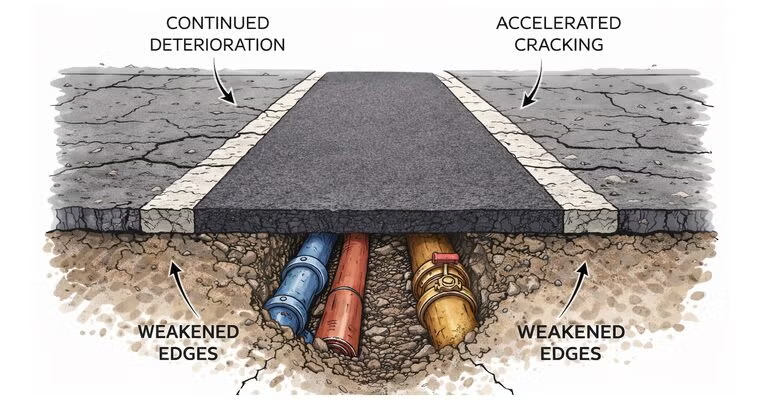
Portland has a recurring right-of-way problem that most people experience without naming it. We excavate the same streets repeatedly, often within a short time window. That pattern shortens pavement life, increases disruption for residents and businesses, and drives avoidable public cost.
If Portland wants to reduce repeat cuts and protect pavement investments, two approaches should be developed together: stronger coordination (Dig Once, joint trench, and “open trench” opportunities) and a street damage restoration fee that reflects the real structural harm caused by trenching.
PBOT’s local transportation funding materials describe the issue clearly. Trenching can reduce the useful life of pavement by more than 60 percent, meaning a street designed to last 15 years may need to be repaved in 5. PBOT also notes the scale: over the last three years, the equivalent of 50 miles of Portland streets has been trenched for excavation.
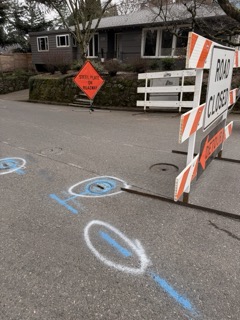
PBOT’s proposed street damage restoration fee is intended to address a gap in current practice. Street opening permits cover administrative costs and require restoration to PBOT standards, but they do not account for the trench damage itself. PBOT also frames the fee as a way to encourage better coordination with scheduled street work, which would reduce disruption and extend pavement life.
A fee alone does not solve the coordination problem if we cannot reliably anticipate projects and communicate early enough for utilities and providers to plan around them. Dig Once and joint trench efforts succeed when a city can do four things consistently:
Maintain an up-to-date project pipeline that is reliable enough for early notification.
Bring the right internal decision-makers to the table so silos do not block implementation.
Make permitting and participation predictable so providers can engage without excessive friction.
Offer clear operational triggers for when coordination is expected or prioritized.
This is where Eugene’s experience is instructive. In a recent conversation with the City of Eugene’s Broadband and Telecommunications Program Manager, Jay Runte, the most consistent theme was that this work is multi-year and relationship-driven. Eugene emphasized sustained engagement, internal alignment across departments, a standing broadband deployment committee, and consultant support (Tilson) funded through federal resources. They also tied their work directly to digital equity and reducing barriers, including streamlining permitting and improving coordination to increase competition and deployment effectiveness.
If Portland wants coordinated trenching to be more than a concept, the Capital Improvement Plan (CIP) must function as a communication tool, not just a planning document. When the CIP is out of date, overly high-level, or not designed for broad internal and external visibility, meaningful early notification becomes nearly impossible.
Improving CIP communication and reliability is one of the most practical first steps Portland can take because it enables earlier coordination and reduces surprises. It also creates a shared reference point across bureaus and with external partners.
One concept worth exploring is structuring “open trench” coordination through an intergovernmental agreement (IGA), rather than relying on city code changes as the first move. An IGA approach can create a workable framework across public entities, set expectations for coordination and notification, and remain adaptable as the city learns what works through pilots. Codification can follow once the operational model has been tested and refined.
Portland has explored versions of this approach before. Around 2005, the City discussed requiring telecom carriers to move into a single trench and placing a multi-year moratorium on street cuts on what is now Harvey Milk Street (then Stark Street). The effort ran into carrier resistance and did not proceed. That history matters because it underscores the need for an implementation model that is operationally realistic, defensible, and structured to reduce conflict.
Street damage fees and Dig Once coordination should be developed together. The fee addresses the real cost of trench damage and strengthens the incentive to coordinate. Coordination efforts, in turn, create a feasible pathway for utilities and providers to plan their work with the city’s pipeline rather than reacting after the fact.
If Portland does both well, we get fewer repeat cuts, longer-lasting pavement, less disruption, and a more predictable process for everyone using the right-of-way. That is a basic competence win for city government, and it is the kind of improvement residents and businesses will actually feel.